
2027 Media Communicators Network
- Image
In today's world, journalism, movies, television, and social media dominate the way we, as an increasingly global community, understand and relate to the world and each other. If Christians wish to continue making a meaningful impact upon the world, gifted communicators who want to relate biblical Christian faith to contemporary culture through these media platforms will be greatly needed.
This Network seeks to encourage and equip such existing or emerging leaders who can speak with authenticity, relevance, and integrity from within these influential cultural arenas. It will also focus on biblical foundations and models, worldview analysis of media and popular culture, and critical reflections on creative communication in contemporary media contexts.
The ELF Media Communicators Network draws upon the strategies and the resources developed within the global Lausanne Media Engagement Network, and will seek to build friendships and facilitate networking and partnership among Evangelical media communicators in Europe and beyond.
Prior preparation will be set for all applicants.
What Network Participants Are Saying
- 'I joined the Media Network to find practical ways to improve and communicate with people more efficiently. This is my second time at ELF, and this is also why I so much appreciate the opportunity–the view on things here is global. You get to connect with people whom you would otherwise never meet, and you get to share experiences and learn together.'
- Robert Dados, Startup Owner of Miastro Church, Poland - 'I have been attending ELF for over a decade, and it has been one of the greatest resources in my ministry. ELF’s impact is irreplaceable. Thanks to ELF, I have met people who have helped me shape my understanding of cultural impact and taught me how to engage with secular post-Christian culture.'
- Jan Mahrik, Pastor and Church Planter, Slovakia - 'I lead a news and opinion website for Europe called "Evangelical Focus," through which we report the news from a Christian perspective. Being at the Forum has been key for this work. It has led to many connections with leaders from across Europe, including good thinkers and fellow media communicators. All the media and communication training and Gospel encouragement I have received has made a big difference.'
- Joel Forster, Journalist, Spain
Applicants should be current or potential leaders who are gifted communicators in the media (in such creative fields as journalism, movies, television, or social media), media commentators, media critics, media teachers, or media scholars. Whatever the role, the common missional vision should be the wish to relate biblical Christian faith to contemporary media in a way that is authentic, appropriate, and relevant.
Network Leadership



Network Speakers
Charlie Catlett is a senior computer scientist at the U.S. Department of Energy’s Argonne National Laboratory, with visiting appointments at the University of Chicago and the University of Bristol. He has focused his research for 40 years in the development of the Internet and WorldWideWeb,… Read more
Lars Dahle is a theologian, educator, preacher, and apologist. Having a long previous experience in various academic leadership roles, he now works as Professor in Systematic Theology (with a speciality in Christian Apologetics) at NLA University… Read more
Margunn Serigstad Dahle, the co-leader of the European Media Communicators Network, is Professor at NLA University College, Kristiansand, Norway, where she has taught in the fields of communication, media, and worldviews since 1991. She was for many years Programme Director for the Communication… Read more
Alexander Fink is Director of the Institute for Faith and Science (Institut für Glaube und Wissenschaft) in Marburg, Germany (www.iguw.de). He studied physics at Bayreuth and St. Andrews (UK) universities and received his PhD at the Institute for Biophysics at… Read more

Joel Forster is a journalist in Spain and leads EvangelicalFocus.com, a daily news and opinion website for Europe, started in 2015. He also serves as an elder in his local church in the city of Valencia. Joel has a degree in journalism (Autonomous University of Barcelona, 2008) and did his… Read more
Bjørn Hinderaker is an Assistant Professor at the accredited NLA University College, Kristiansand, Norway (https://www.nla.no/en/), where he teaches Christian Apologetics, Worldviews, and Ethical Theory. He has previously served as missionary to Kenya and as… Read more

Dr Gordon Macdonald is the Chief Executive of the Care Not Killing Alliance, a campaign based in the UK which opposes the legalisation of assisted suicide and euthanasia and promotes palliative care. He has served in this role since April 2019. Prior to that, Gordon was the Scottish Policy… Read more
Mihail Stefanov is the assistant pastor at Crossroad’s Church Sofia (crossroadchurch.bg) and the founder of Culture and People (cultureandpeople.eu) – an international consulting firm helping global business leaders transform the culture of their organizations. He has a deep passion for… Read more
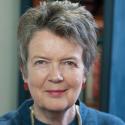
A career journalist and cultural analyst, Dr Jenny M Taylor has worked in secular newspapers, Evangelical missions and the academy, and was Associate Fellow in Journalism at the Kirby Laing Centre, Cambridge. As Founding CEO of Lapido Media for nearly 12 years, she helped introduce mainstream… Read more
Network Programme
Sunday, 23 May
Is there a link between journalism and the Bible, and if so, is it time to sever the connection? As Big Tech zeros in on our traditional ways of life with often chaotic results, what is being lost–or possibly gained–in public interest journalism? This session takes a deep dive into the Hebrew origins of political discourse and the surprising roots of journalism, and applies these learnings to the Tower of Babel that is our current media predicament.
This learning community session builds on the principles from the previous discussion by focusing on practical application. Through case studies, participants will practice processing current events and the impact of media on journalism from a Christian perspective. They will also have the opportunity to share insights from their own experience and apply the lessons to their specific contexts.
Monday, 24 May
As AI continues to advance rapidly, how can we use it effectively and responsibly in media and communications? This session will explore practical ways to use AI to work more efficiently, generate ideas, improve content, and streamline everyday tasks. Discover useful tools and prompting techniques, learn how to get better results, and consider where human judgment remains essential. Along the way, we’ll examine how to avoid common pitfalls and use AI in ways that uphold truth, integrity, and care for others.
In European and other Western countries, it has become more prominent for Christian ethics to be marginalised in public policy as part of a secularist agenda. Despite this, opportunities remain for constructive Christian advocacy and engagement in public policy formation and wider public discourse. There is an urgent need for Christian leaders and professionals to challenge the prevailing atheistic, materialist, and secularist narrative. This session will explore the biblical mandate for Government as well as how Christians should respond when secular authorities fail to fulfil that mandate in an appropriate manner. It will critique the engagement of Evangelical Christians with the state and explore how to find the right balance between maintaining a distinctive voice and working collaboratively with the Government and within public agencies to promote the common good. Finally, it explores the boundaries for Christian professionals seeking to fulfil their vocation amid legislation and policies which conflict with Christian ethics.
Tuesday, 25 May
Metaphor is not ornamental — it is among the most powerful weapons in persuasive communication. Two thousand years ago, Jesus understood clearly that metaphors are the architecture of thought and mastered the art of using them to shape how people grasp truth, meaning, and reality. Inspired by His example, in this session you will learn how to discover and analyse the master metaphors that dominate secular narratives. You will also practice crafting counter-metaphors and applying them in your communication strategies to explain faith more vividly, engage culture more wisely, and speak truth in images people can see and feel.
The Reformation Heritage can be summarised as grace alone, by faith alone, in Christ alone, as found in Scripture alone, to the glory of God alone. How can we be wise stewards of these Reformation truths in our families, churches, and Christian schools? How can we relate them with authenticity and relevance to popular trends, values, and stories? The session will include case studies, illustrating a cultural apologetic approach and the use of practical tools.
Wednesday, 26 May
The dominance of agnostic naturalism in media creates a cultural view that naturalism is the default worldview, while theism is unscientific and old-fashioned. Hence, we decided to produce documentaries which are more explicit about worldview assumptions, showing that scientific data can be interpreted within different worldview frameworks, thereby opening space for discussion. In this talk, we discuss the vision, the process of production, and the outcomes of making scientific documentaries and how they could inspire your media projects.
In the final session of the Network, participants will reflect on the insights and outcomes of the week, identify takeaways, and spend time together in prayer.