
2027 Academic Network
- Image
As Christian academics, we often experience isolation because of our own introverted and reclusive personalities. At the same time, because of the far-reaching influence of the classroom and higher education in shaping leaders and the next generation, every Christian scholar possesses an outsized potential for multi-generational impact. Our calling is to bring glory to Christ in the academic setting where we serve. This is why, as followers of Christ in the academy, we must be intentional about connecting with other like-minded colleagues.
The primary purpose of the ELF Academic Network is to gather together Christian scholars throughout Europe for equipping, uniting, resourcing, prayer, and accountability. At the 2027 Network, you will be blessed by outstanding presenters. Each one is a recognised scholar who, in their own academic work, is living and modelling what they teach. You will have opportunities to ask questions, discuss issues with your colleagues, and reflect on how these principles should change the way you think, live, and teach. Prior preparation will be set for all applicants.
What Network Participants Are Saying
- "As a medical doctor, an assistant professor, a PhD student, and a researcher, a main part of my ministry is to be a witness for Christ in academia. Words cannot fully convey what the ELF and its Academic Network have meant to me. I am now a lot better equipped to serve both Christians and non-Christians. I cannot fully imagine how the consequences of this will ripple outward for the glory of God."
- Hristian Staykov, Medical Doctor and Assistant Professor of Pharmacology, Bulgaria - "At the Forum, I had the chance to hear about principles of ministry in the modern world, meet new friends, and take a break from the war currently happening in Ukraine. This Forum was a source of inspiration and motivation for me and my ministry. I will use the resources and experiences to share the Gospel and bring more people to Jesus!" - Ruslan Khmyz, Seminary President, Ukraine
- "Being at the Forum is very encouraging to me because I have the opportunity to get to know leaders from other organisations who share the same burdens and concerns I do. I am learning new ways to negotiate my faith while serving my Bible school, the church, and the community of faith I belong to back home."
- Marius Ban, Lecturer, Romania
Applicants should be teaching or leading in a university, seminary, or other post-secondary educational institution or be graduate students who hope to serve Christ in the academy. This Network will help academicians from a wide spectrum of disciplines to think about their discipline from a Christian worldview, attain excellence in teaching and research, share Christ with others, and maintain spiritual fervour.
Network Leadership


Network Speakers
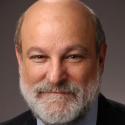
Darrell L. Bock is Senior Research Professor of New Testament Studies at Dallas Theological Seminary in Dallas, Texas, as well as Executive Director of Cultural Engagement for the Hendricks Center for Christian Leadership there. An author or editor of about fifty books, his special fields of… Read more
Sarah Cardaun is a scholar from Germany with a broad range of research interests in political science, public administration and public policy with a focus on security and resilience. She has taught various subjects at universities in the UK, Brazil and Germany. Since 2019, Sarah has been… Read more
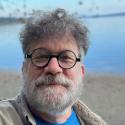
Charlie Catlett is a senior computer scientist at the U.S. Department of Energy’s Argonne National Laboratory, with visiting appointments at the University of Chicago and the University of Bristol. He has focused his research for 40 years in the development of the Internet and WorldWideWeb,… Read more
Per Ewert is the director of The Clapham Institute, Sweden’s leading Christian think tank and research institute. His PhD describes the political process which shaped Sweden into the world's arguably most secular-individualistic nation. Per is the author of several books on the Bible,… Read more
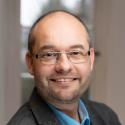
Alexander Fink is Director of the Institute for Faith and Science (Institut für Glaube und Wissenschaft) in Marburg, Germany (www.iguw.de). He studied physics at Bayreuth and St. Andrews (UK) universities and received his PhD at the Institute for Biophysics at… Read more
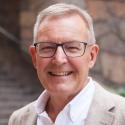
Stefan Gustavsson is a member of the European Leadership Forum Steering Committee. He is the director for Apologia – Centre for Christian Apologetics and makes his home in Stockholm. He was the founding general secretary for 16 years of the Swedish Evangelical Alliance. Stefan travels widely… Read more
David Sandifer was born and raised in France, of American parents. He holds a Ph.D. in history, from the University of Cambridge (2014). He spent 20 years in pastoral ministry in the U.S. and Australia, and also worked for a Christian public advocacy organisation in Australia, where he co-… Read more
Network Programme
Sunday, 23 May
While the secularisation of Europe has been very long in the making, the last twenty-five years have seen an acceleration of a detachment from its historic Christian roots. The resulting cultural changes have been immense and sometimes bewildering. How should Christians, particularly Christians engaged in academic work, understand these changes? How should we view them historically, philosophically, and theologically? And how should we respond in ways that allow us to engage contemporary secular culture without compromising our biblical commitments? These are some of the questions which this presentation will seek to answer, as we trace both the inner logic of secularism and its inescapable incoherence.
As Christian academics, how can we steward our time well? Life is busy, and there are areas in which we can and should use our natural abilities, talents, and strength to organise the details of our lives and maximise productivity. In this session, we will evaluate tools that can help us in this endeavour, but we will also consider the role of prayer, being led by God’s Spirit, and acknowledging the limits of our own control in our day-to-day activities.
Monday, 24 May
During the last decades, a trend of nominally Evangelical churches, organisations, or theological seminaries moving towards theological liberalism has appeared in several places. This trend has, however, appeared also in earlier times. What factors are at work in this drift towards liberalism, why are they so seductive, and how can we respond to them in order to remain Biblically Christian?
'What we start to think in the universities today shapes what we will live tomorrow in the marketplaces' (Ortega y Gasset).
It is wonderful when a Christian has the gifts and the open doors to live his Christian life in the university context as a professor, academic researcher, or academic teacher. Personal relationships are important to win credibility for witnessing. But how can we really get Christian content into the university structure itself without looking alien? What can we learn from Paul in the philosophical centre of the ancient world in Greece, and how can we apply this to our academic life in the university today? How can we discover relevant Christian content, and how can we set up credible events that have an impact on the academic community of our universities and get them thinking?
Tuesday, 25 May
More information about this session coming soon!
More information about this session coming soon!
Wednesday, 26 May
No one who is a believer would consciously deny the full Lordship of Jesus Christ. There are, however, a number of ways we inadvertently diminish His Lordship. This talk explores how a diminished Lordship impacts the way we use our minds as believers. A strong foundation for apologetics must begin with an acknowledgment of Christ's full Lordship. How ought this to impact the way we think?
Many people question whether the New Testament Gospels can be trusted, given they were written decades after the events they portray and with some debate about whether we can know who wrote them. Does the combination of eyewitnesses, oral culture, tradition, and the floating nature of memory work well in an ancient setting that produced these four key books of the Bible? This session will consider how the Gospels emerged in an oral cultural context with a note about how the tradition worked, how the Gospels relate to each other (especially the relationship between the Synoptics and John), dealing with the differences between them, the role of cultural background, and finally a look at how the Gospels make a case for who Jesus is.